RSS ⧉

nedshed.dev

Ned Twigg

A virtual and literal workshed where I make tools. When I build something here, half of the purpose is to have the tool I want, the other half is to refresh my sense for what greenfield coding even is. I'm making Dormouse.sh (a multitasking terminal for mice and phones).

In response to Venkatesh Rao's Blyg ↗

thread · 1 quoted

Damn, this is very nonobvious. Wouldn’t the critter get eaten before its predator dies though 🤔

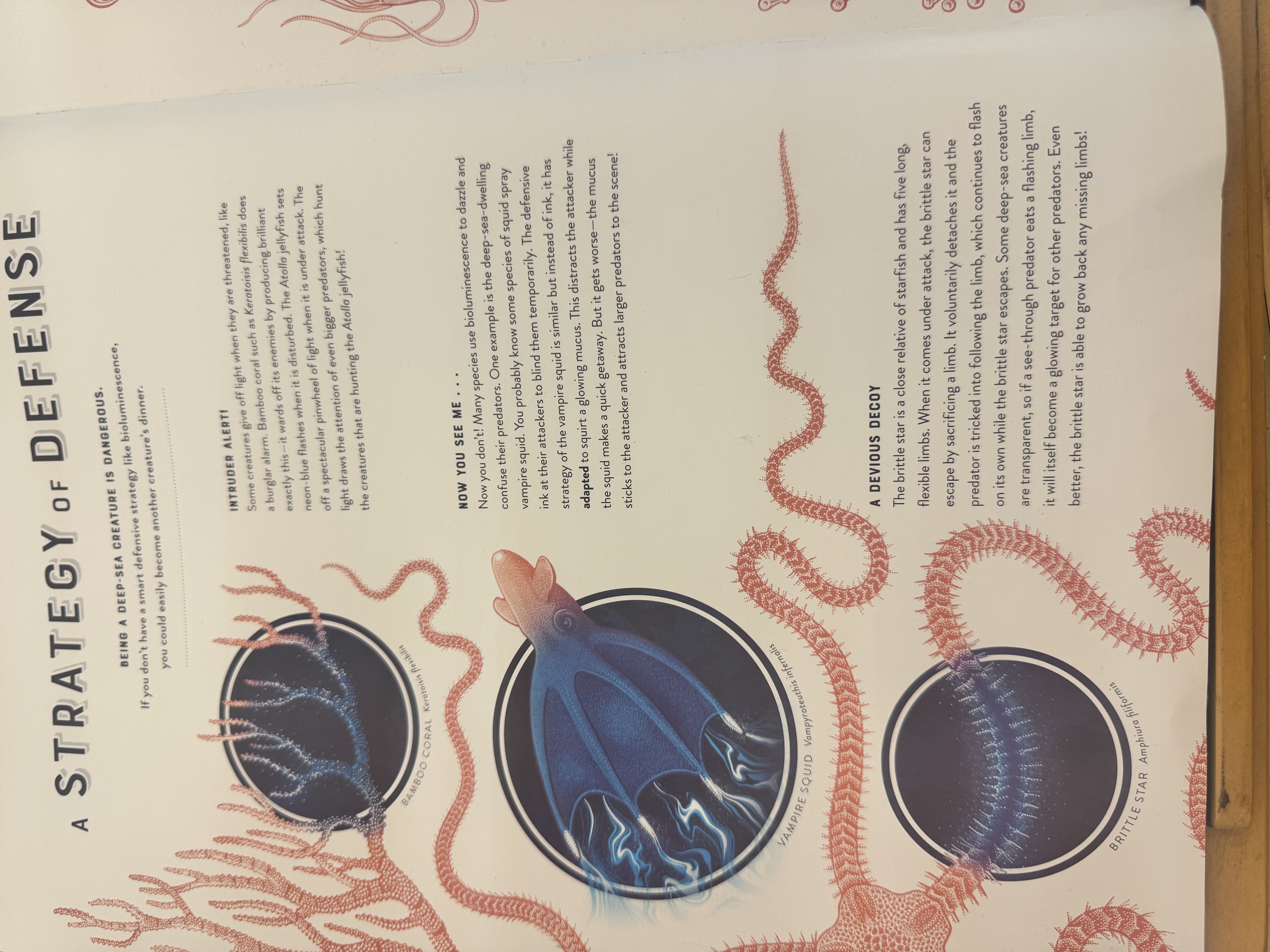
I just learned that one of the reasons for deep-sea bioluminescence is to attract predators. As in “bump me and I’ll light up, and then something bigger then either of us will come and you are more their prey size than I am”.

In the dark forest / tangled bank, the dominant environment is alive. Whereas in the deep sea, the dominant environment is empty space. The flower-guy monster from S1/S2 of stranger things is also from this “empty space” paradigm.

from blyg.nedshed.dev ↗ · snapshot of v1

from Venkatesh Rao's Blyg ↗ · snapshot of v2

There's a mismatch on the dexterity length-scales. A frog can eat a fly, a hawk can eat a frog, but the hawk can't eat a fly. In the deep ocean, the fly can make enough light to bring a hawk, and if the frog knows that, then he's gotta take that into consideration.

Fly is a bad example, beehive is probably a better analogy for a deep-sea jellyfish or coral (the specific examples the book gave). Sure you can take a bite, maybe you're even capable of eating the whole thing eventually, but you're not capable of eating the whole thing fast enough, and the disributed-organism will regenerate just fine after the bite you took ended up wrapped in another bigger bite.

Mostly too noisy up here for those strategies to work, but it's probably at least part of why it's worth hissing/screaming if you're losing a conflict. What have you got to lose, try to bring a third player in and maybe they'll flip the whole table you're losing at.

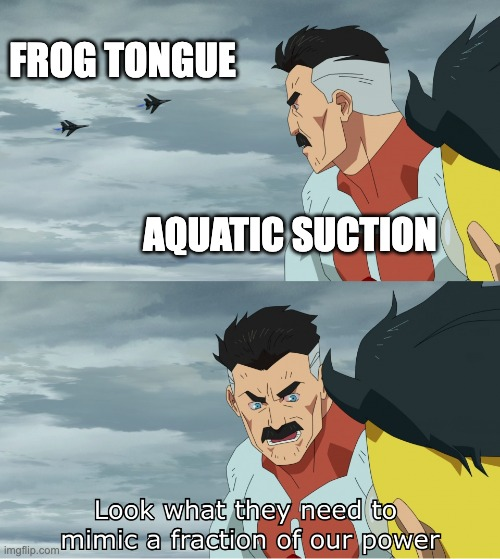
I got to spend a few days scuba diving the great barrier reef, and the most baffling thing is how many prey fish hang out right next to their predators. In our terrestrial world we're used to the square/cube thing where ants can carry 10 times their bodyweight while a giraffe has to be very very careful about the motion planning for its neck. The ocean takes those and then compounds it with massive reynolds number differences - the action space of each creature is very unintuitive. So many underwater creatures have massive suction capacity - ambush predation hits totally different underwater than on land.

I think that might be at least part of why the ocean has so many more "sessile animals" than we have land. Coral, jellyfish, anemones, oysters. They're a trump card to suction ambush predators.

read the thread →

Created: Nov 20, 2026

In response to Venkatesh Rao's Blyg ↗

thread · 1 quoted

Permissions and payments are coming

Put some Fable cycles to work figuring out the basic spec for how to do permissions and on top of that payments on blygger. There are 2 new RFCs with a 2-week comment period before I put them in the spec.

These 2 will have significant consequences for major use cases, including enterprise and paid publishing, so if you have opinions on those fronts now us the time to speak up. Especially important for anyone considering building actual commercial businesses on top of blygger.

Sealed Content and Payments: Two RFCs for Level 3

Everything a blyg publishes today is public. Anyone who can reach the origin gets the same bytes, and every item, quote and changelog note can be read by anyone. That is what made the first four protocol versions simple. It is also why a whole class of ordinary writing has nowhere to go: the board memo with one name that can't be shared yet, the working notes meant for a team, the essay you want to charge a dollar for.

Two new requests for comments open Level 3, the protocol's next layer. RFC-6, sealed content and permissions, lets an item carry encrypted words beside its readable ones, and says how a reader gets the key. RFC-7, payments, treats paying as one more reason to hand over a key. They come out together because RFC-7 is built entirely from RFC-6's parts. Both are drafts, and both are open for your comments. This post explains them in plain language.

The use case: sharing inside an organisation, with no assumed structure

The first user is the Protocol Institute, a decentralised organisation with no single sign-on. Some of what its members write should reach everyone, some only a working group, and some only one officer. A traditional company with one central set of permission groups has to fit the same design, and so does a reader at another organisation, using a different client, asking to see something.

One case shaped the design more than any other: redaction. Picture a sentence that should be public, except for one phrase inside it that only the board may read.

Covers: what older readers see

Here is what that sentence looks like on the wire:

There is an acquisition offer from the acquirer. The board meets on Friday.

"The acquirer" is a cover: ordinary words the author wrote to stand in for the sealed ones. The real name is encrypted and sits in a new sealed list in the item document. A reader that holds the key swaps the cover for the real text. Every other reader shows the cover.

This brings no new markup and no placeholder syntax. A cover is ordinary prose, so every client that exists today keeps working: it shows a sensible sentence, the feed entry reads normally, and a reader that has never heard of Level 3 sees nothing broken. The same mechanism works at three sizes: a phrase inside a sentence, a whole item behind a teaser, and a sealed item quoted into a thread.

Locks, not lists of readers

The obvious design is to list every reader in the document, each with a copy of the key encrypted to them. RFC-6 rejects it, because that list would be public. Everyone could see how many people can read an item and watch the number change over time. The protocol has always refused follower lists, and an audience list is one under another name.

Instead, a document names locks. A lock is a random id standing for a key. Holding the lock's key means you're in the group, and the group's membership is never written down anywhere public. One entry can carry several locks (any one of them opens it), and sealed content can sit inside other sealed content, so a reader has to hold both keys.

Grants as files at secret addresses

How does a reader get a lock key? Each lock has a home: a URL that answers requests for keys. A key granted to you is wrapped to your public key and saved as a plain static file at an address only you and the home can work out. To check whether you've been let in, you fetch that address. Nobody else can tell which addresses exist or for whom.

So a home can pre-approve people without ever contacting them. It writes the file, and the reader finds it on the next check.

When a request has to be decided, the home works through what RFC-6 calls a ladder: pre-approved, automatic yes, automatic no, or ask a person. That person can be the lock's owner or the owner's AI delegate, working from standing instructions. How a home decides is entirely its own business. It might use a roster, a sign-on token, a signed NDA or a payment.

One rule protects member lists. A home may answer "granted" on the spot only when the request itself earned it, for instance with a payment or a token. If it answered instantly for everyone already on its roster, anyone could name a stranger and learn from the reply whether that stranger is a member.

A promise the publisher can't quietly break

Two smaller pieces of cryptography do a lot of work here.

A publisher can't show two readers two different texts. Each sealed entry carries a public commitment that every key holder checks. Without it, a dishonest publisher could craft one encrypted message that opens to two different texts under two different keys, and give each reader a different one.

Nobody can confirm a guess. An earlier sketch put a hash of the sealed text in public view. Anyone who suspected the redacted name was "Northwind Capital" could have hashed that guess and compared. The draft drops it.

Quoting doesn't widen the audience

Quoting is at the heart of Blygger, so quoting sealed content had to work. When you quote an item that has a sealed span, your thread carries a copy of the encrypted entry, not the plaintext. Readers who hold the key see through the redaction in your thread too. Everyone else sees the cover. Quoting into a thread meant for a wider audience lets nobody new read the sealed words. In the RFC's phrase: audience travels with the lock, not with the context.

What it does not pretend to do

RFC-6 is plain about its limits. Revocation stops future grants and future content, and nothing more. Nothing recalls a key or a text someone already opened. A pinned version keeps its keys forever. And a stranger can still see that a sealed item exists, roughly how large it is, when it changed, and what it cites. The RFC lists every such leak so that you can judge whether it is acceptable for your use.

RFC-7: payment is one more way to earn a key

RFC-7 starts from one principle. Payment rests on competing schemes, as identity does, so the protocol holds as little opinion about it as it can. The draft adds nothing to the wire. A payment is one more piece of evidence a home can accept, alongside a sign-on token or a signed agreement. A paid-for lock is an ordinary lock.

The interesting choices:

  • Any payment method, unmodified. A lock's or entry's request URL answers HTTP 402, "Payment Required", in the payment method's own format. That covers x402 (on-chain payments), MPP (which also carries card payments, through Stripe among others), Lightning, or a checkout link for a person at a browser. The protocol names no preferred method. If one wins outright, nothing needs undoing.
  • No prices anywhere in the protocol's files. There is no price, currency or for-sale flag in any item or manifest. Changing a price is a change at the home, with no new version and no feed event. The cost: an agent has to ask the home about each sealed entry, and the home sees what it looked at.
  • Two doors. An entry's door sells that one piece. A lock's door sells everything sealed under it for the current period: a subscription. A key bought for version 3 still opens version 4 if the sealed text didn't change.
  • Rent or purchase is the seller's choice, made by which keys it hands out. Give subscribers the lock key for each paid period and they keep that period's content after they stop paying. Give them one key per item as they read it and access ends when payment does, which is rent as most people know it. The draft recommends neither, and says plainly that "purchase" is weaker than the word suggests unless the seller pins what was sold.
  • Agents are the expected buyers. The draft assumes the typical purchase is made by an agent working within a spending limit a person set ("anything by this author about biology, under a dollar"), not by a person at a checkout page. It writes rules for that agent: treat the seller's description as untrusted text that may try to steer you, never pay for what you already hold, and keep the receipt and the commitment as evidence of what was advertised against what was delivered.
  • Buying without a blyg. Pay at an ordinary storefront, then redeem the voucher into a pass: a bare key your reader app generates, which works without an account. The draft is plain that a pass is a bearer instrument, like a ticket.

What RFC-7 refuses: anything in the protocol that claims to restrict use after delivery, such as expiry dates, read counts or metering. Nothing could enforce it. Rental as a business is fine. Pretending cryptography can take back what a reader already opened is not.

Thirteen assumptions to attack

RFC-7 lists the thirteen assumptions it rests on, each with what would change if it is wrong. Agents buy more than people do. People set limits rather than approving each purchase. Small payments are economic on at least one payment method. Subscriptions matter as much as single purchases. Readers without a blyg are a real population. This is the part of the drafts where your experience is worth the most. If you think one of them is wrong, say which and what you see instead.

How to comment

Both RFCs are published on this blyg with a comment period open until 28 November 2026. They are published as drafted, before the protocol's editorial pass, so expect revisions during the period; each one is a new version of the same item. Comments use the medium itself:

  • Respond by stubbing the RFC from your own blyg. Your response names the exact version you read.
  • Quote the passage you're answering with a partial quote.
  • Counter-propose by forking the RFC and changing what you'd change.
  • No blyg? Comment on GitHub: blygger-spec#34 for RFC-6, blygger-spec#35 for RFC-7.

Each RFC ends with questions for implementers. Would you run a home, or use someone else's? Can your platform do AES-256-GCM, HKDF and X25519 today? Which payment methods would you accept? Is one request per sealed entry tolerable for your agents? Answers to those, from anyone building or planning a client, shape what gets built first.

When the period closes, the rulings are revised in light of what was said and each RFC becomes a technical note. The build then starts small: sealed spans with keys handed over by hand, which alone opens protocol version 0.5. Origin keys, homes and grant files, the request endpoint, and subscriptions follow, each usable without the next.
Source: docs/posts/2026-11-14-sealed-content-and-payments.md in blygger-spec, which is where revisions are made. To comment, respond to this item from your own blyg.

“Sealed Content and Payments: Two RFCs for Level 3 Everything…” ↗ · from Blygger · snapshot of v1

from Venkatesh Rao's Blyg ↗ · snapshot of v1

OnlyBlygs

read the thread →

Created: Nov 14, 2026

In response to Venkatesh Rao's Blyg ↗

thread · 1 quoted

For later: people are gravitating to a dead-reckoning model of intelligence by treating length of autonomous runs as a kpi. I think this is ill-posed. Perfectly playable domains allow dead-reckoning to substitute for situated orienting and maneuvering because simulation is 100% fidelity and tractable. Where that’s not true it’s the wrong mental model.

from Venkatesh Rao's Blyg ↗ · snapshot of v1

There’s this ecosystem of terminal-focused agent orchestrators (herdr, conductor, etc) that have this dark-factory view.

I’ve been trying to do sort of the opposite and focus on rubbing as much of my physical senses across what the swarm is building, and force the “dark factory” to orient and gatekeep around that.

I haven’t found a good analogy for it yet. Sort of like “the design team is the ant queen, and the point of the agent colony is to bring things to the ant queen for her decisions” but it’s a tortured metaphor.

read the thread →

v2

Created: Nov 12, 2026 Most recent: Nov 12, 2026, v2

In response to Notes | Matthew McDowell-Sweet ↗

thread · 1 quoted

Temperament, attachment and the flinch learned in childhood are written early and deep, acting before thought arrives.

from Notes | Matthew McDowell-Sweet ↗ · excerpt of v1

Big 5 and attachment theory are both good stuff but incomplete, I love “flinch learned in childhood” as the dark matter to fill in the gaps, what a great turn of phrase!

read the thread →

Created: Nov 12, 2026

I think the big breakthroughs in Opus 5.5 and Astra 6 is that the models finally close stuff out more than they open it up. Takes a lot less handholding to get something done and shippable now than it used to.

Created: Nov 10, 2026

I just learned that one of the reasons for deep-sea bioluminescence is to attract predators. As in “bump me and I’ll light up, and then something bigger then either of us will come and you are more their prey size than I am”.

In the dark forest / tangled bank, the dominant environment is alive. Whereas in the deep sea, the dominant environment is empty space. The flower-guy monster from S1/S2 of stranger things is also from this “empty space” paradigm.

Created: Nov 8, 2026

In response to Notes | Matthew McDowell-Sweet ↗

thread · 1 quoted

The “companion on a cliff edge” is nice. I suspect that it reliably leads to a higher level of interesting thought, too. Keith Johnstone had this notion in Improv about why we’re drawn to large vistas; they allow us to unfurl, to be unobstructed. Oblique intimacy seems tied to that.

In the case of blyg, the choice is to make that dialectic somewhat oblique, by keeping the social graph aspect at arm's length, and the focus on content nodes rather than the centering the conversation itself. I have this visual image of 2 people looking at a scene together and commenting to each other about it, but not looking at each other. Like if you're both standing on the edge of the grand canyon that's what you're looking at.

This is functional unfixedness.… ↗

from Notes | Matthew McDowell-Sweet ↗ · snapshot of v1

https://open.spotify.com/track/022DoLVJCvKytVAfyp8mPw?si=bb54b896d9034503

read the thread →

Created: Oct 21, 2026

In response to Notes | Matthew McDowell-Sweet ↗

thread · 1 quoted

Winston Churchill had this notion of “wilderness years,” where a politician is out of power and irrelevant but nevertheless survives, grapples with fundamental questions, and emerges on a larger stage than before. Involutionary productivity feels like “wildless” years, in a way.

Involutionary productivity is being highly productive while mostly being a reclusive shut-in in your pajamas on a couch with an iPad. The basic presumption among older GenX and Boomer pearl-clutching analysts as well as some anxious younger people, that involution (hikkikomori, laying flat, quiet quitting…) is necessarily synonymous with low productivity or economic dropping-out is false.

Involutionary Productivity… ↗

from Notes | Matthew McDowell-Sweet ↗ · snapshot of v1

Yeah, makes sense that being out of power allows a politician to reposition their orientation lock to a better spot for their next act.

Conversely, the big risk of the building binge is that you’re too oriented to the thing you’re building, not oriented enough to the world outside of it with which it interacts.

read the thread →

v3

Created: Oct 20, 2026 Most recent: Oct 20, 2026, v3

thread

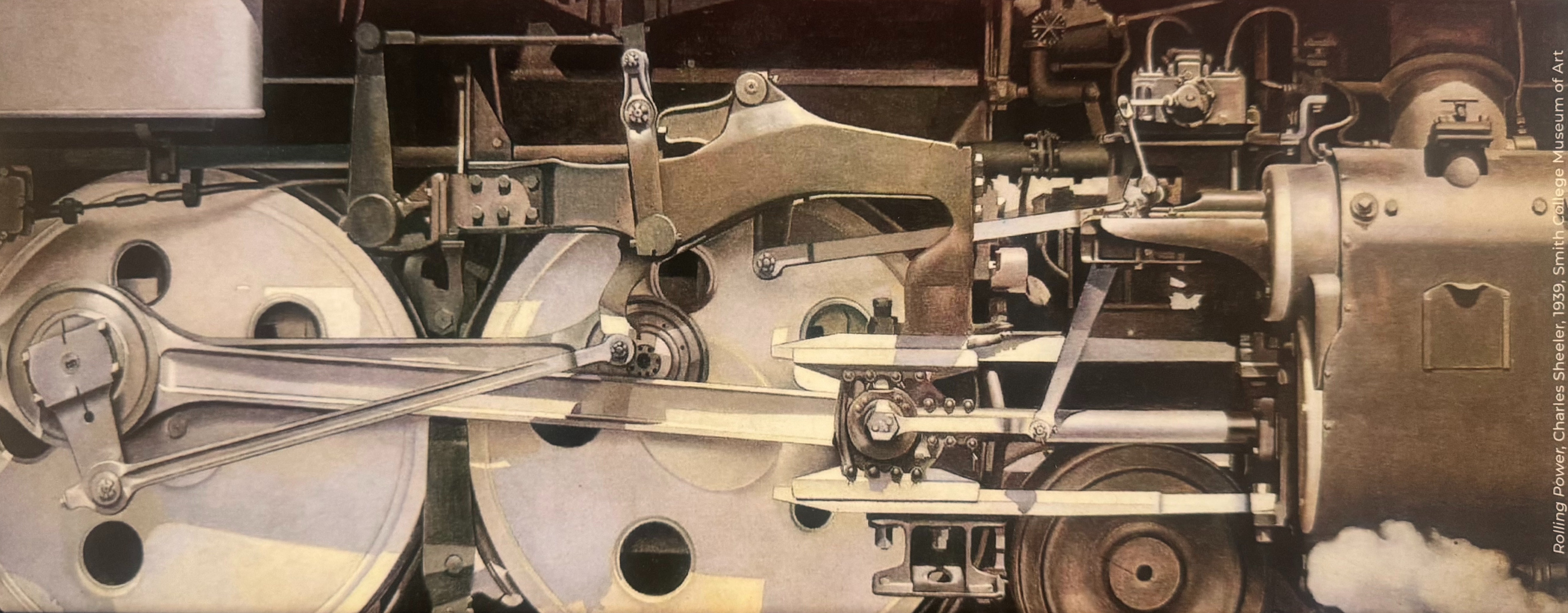
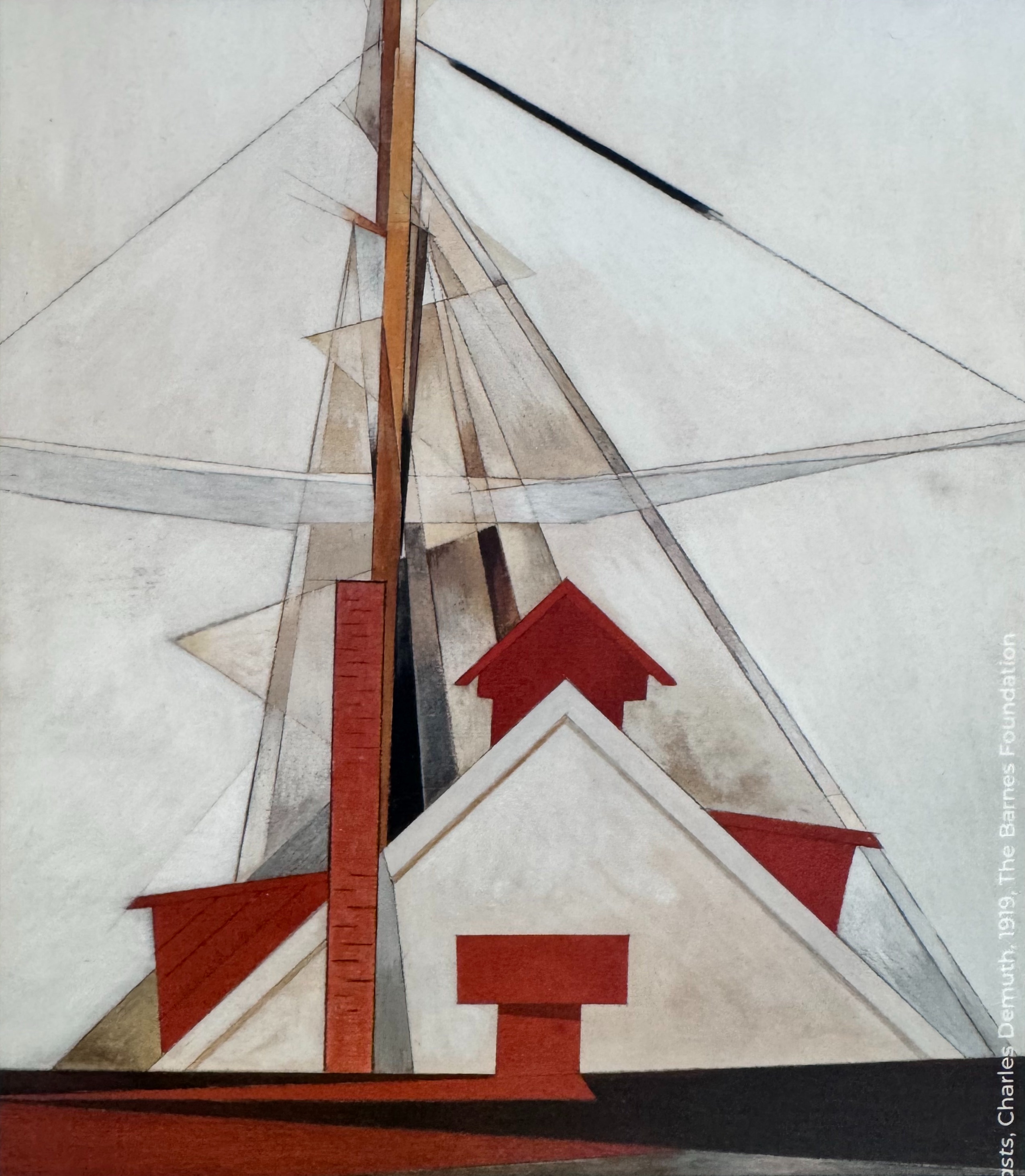
Took the fam to the Maritime Museum in SF. It's a large building that once hosted dances, dinners, and even a casino, but as a museum it's now mostly empty. One glass case in particular stood out - vacant except for a nicely-made placard which explained that it was going to remain empty for the purpose of measuring the conditions within an empty glass case.

But the museum was an overall success, it introduced me to Precisionism...

the first modern art movement born in the United States. Precisionists favored sharp lines, unexpected angles, and crisp brushwork.

Depicting urban and industrial scenes, they often left out people to highlight the beauty of a mechanized world. Scholars argue that this absence reflects - or even critiques - the dehumanizing effects of industrialization. Precisionism flourished in the 1920s and 1930s.

These were the four examples on the museum plaque:

read the thread →

v2

Created: Oct 18, 2026 Most recent: Oct 18, 2026, v2

In response to Venkatesh Rao's Blyg ↗

thread · 1 quoted

Reification, Cranes, and Bootstrapping

The original idea of bootstrapping actually came from a Baron Muchausen tall tale of literally lifting yourself up by your bootstraps, which is impossible under Newtonian mechanics. This led to the operating systems usage for bootloaders which are more like awakening processes, and then to startups that use revenue rather than capital to grow. Call these two kinds first-order bootstraps, where determinate start points gather behavioral momentum through a virtuous cycle. But the starting point is hardcoded. In an OS, the firmware knows to look at a specific address to get into the software. In the purest startup case you could use pure time and labor to produce goods for sale to generate money to grow.

There is a second-order sense commonly used in market-making efforts including market startups. Here you must create buyers and sellers at the same time and sufficient liquidity to get things going. This is less determinate in starting conditions, and closer to the Munchausen ideal but still causal, since the buy side has the money and you start the loop by arranging for speculative/consignment sell side and then pitching buy sides (unless it’s a strong seller’s market).

What interests me though is what you might call third order bootstrapping, where in some sense the process that starts things eventually gets “cut” and the loop becomes internally self-sustaining. A basic example is flight. The bootstrap is the takeoff but once you’re wheels up, lift > gravity and thrust > drag. The physics effect you use to bootstrap (propulsive acceleration) is distinct from the one you use to sustain yourself (lift).

The conceptual counterpart is reification. Treating an abstraction derived from a real instance as itself real, and eventually forgetting the phenomenological origins and sustaining the abstraction through its internal analytics. Like Sun/moon/wheels —> platonic circles —> circle geometry world that has forgotten circularity in atoms world.

The evolutionary version of this kind 3rd order bootstrapping is what Dennett calls cranes. The bootstrapping part is still causal, but the acausal ideal, Dennett’s “skyhooks” is the Munchausen ideal of hopeful monsters.

I’m thinking of all this because blygger to some extent feels like a third-order bootstrapping phenomenon. Can a network of decentralized websites really just “hang in mid-air” based on mutual RSS and webmentions alone? Our bootstrapping path clearly relied on centralized platforms (discord, substack), and the question is whether this can physically “take off” like a plane or the idea of a “circle.” Is the “crane” big enough?

from Venkatesh Rao's Blyg ↗ · snapshot of v1

I had no idea what “Dennets cranes” were, and I wish I could highlight it and ask a question against my Claude API key that my blog has. Of course part of the point of the protocol is that clients can do anything, but seems like the reference client ought to have some form of “augmented reading” built-in to match the augmented writing.

read the thread →

Created: Oct 15, 2026

In response to Summer Lightning ↗

thread · 1 quoted

For several years its been hard to commit to a project naively cause it was getting pretty easy to estimate the effort needed but now with AI you can discover naivete again by starting with the premise "I can do this easier with AI" and realizing that anything worth doing is still going to take a lot of time

from Summer Lightning ↗ · snapshot of v1

I dunno… If I actually know what I want (rare but does happen sometimes) then I’m finding that I really can do weeks of work in hours and be done. I have no issue committing to something like “create a custom wiring layout app purpose-built to the home remodel I am doing”, and in fact it does start and end in an evening.

Pursuing curiosity along a vector that isn’t already covered by some other product or investigator is still boundless. Weirdly AI had a moment where it felt like it shrank the frontier, because the only frontier worth paying attention to was AI, but now I think the applications are starting to be transformative enough on their own and they are more diverse space, so the world feels bigger again.

read the thread →

v2

Created: Oct 14, 2026 Most recent: Oct 14, 2026, v2